Alice Anderson’s Astonishing Anzacs
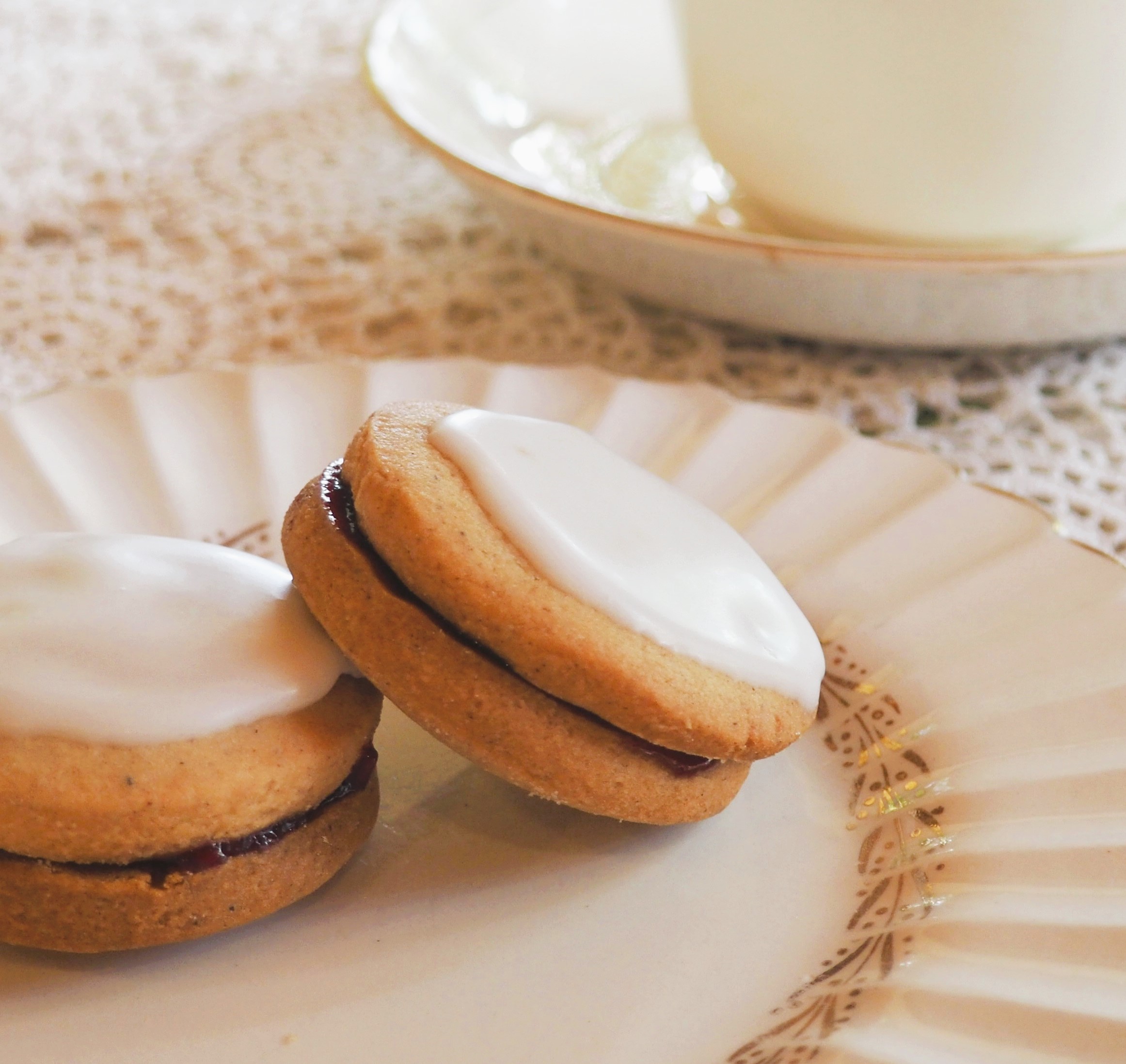
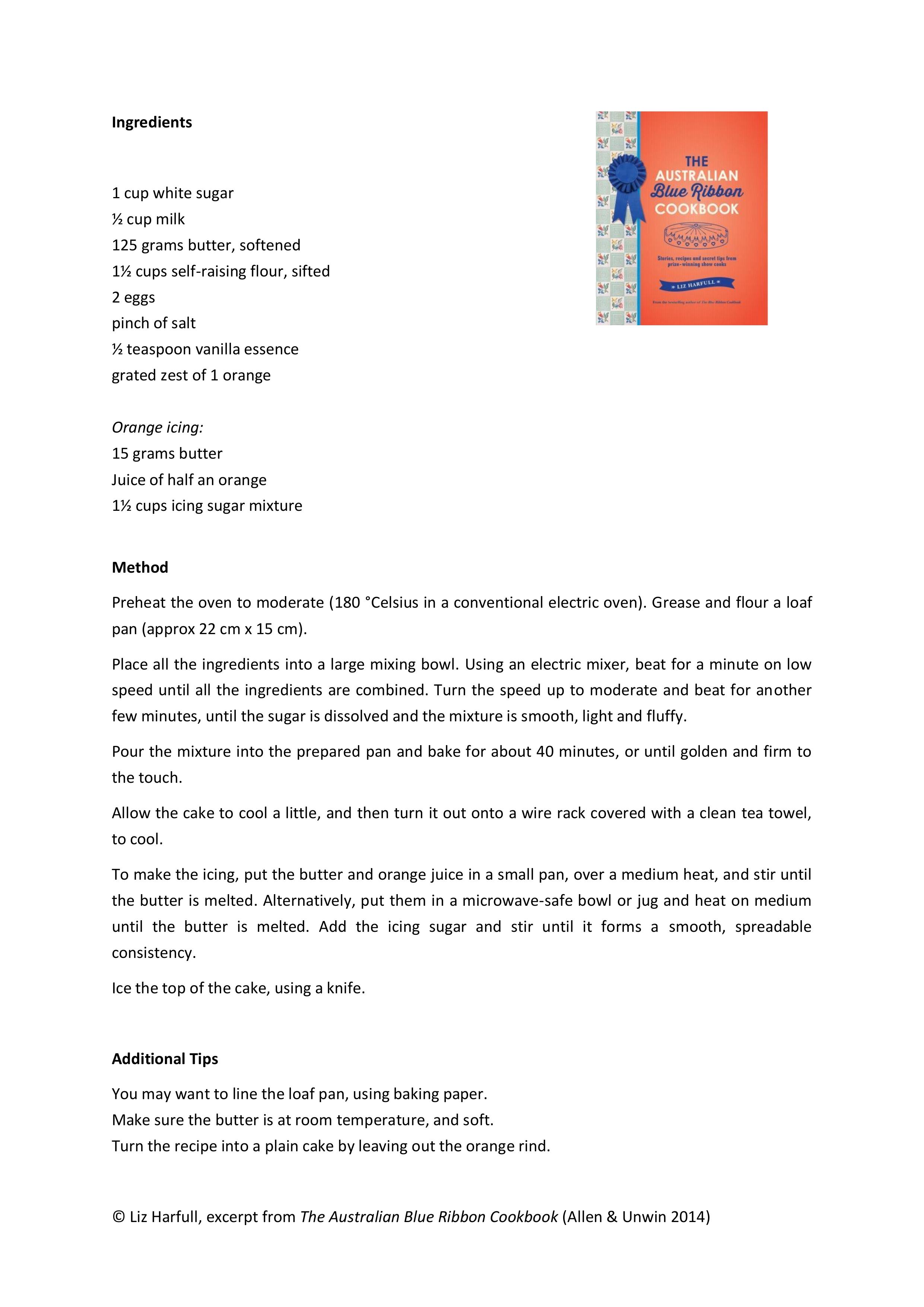
The War Chest Cookery Book holds a special place in Australian food history. Released in 1917 to raise money for the war effort, it contains the first known recipe to be included in a published cookbook under the name ‘Anzac biscuits’. The recipe was contributed by Alice Anderson from North Sydney, whose brother James was serving in France. It bears absolutely no resemblance to the Anzac biscuits of today. Filled with jam and topped with icing, these biscuits are very similar to recipes published before the war under the title German biscuits, which obviously would not do!
Ingredients
120 g butter, softened
120 g caster sugar
2 eggs, lightly beaten
150 g (1 cup) plain flour
1 teaspoon baking powder
1 teaspoon mixed spice
1/2 teaspoon ground cinnamon
160 g (1 cup) rice flour
raspberry jam
Icing:
125 g (1 cup) icing sugar mixture
small knob of butter
hot water
Preheat the oven to 180°C (in a conventional oven). Line a baking tray with baking paper.
Cream the butter and sugar until the sugar begins to dissolve. Add the eggs and beat until combined. Sift together the plain flour, baking powder, mixed spice and cinnamon. Add the sifted ingredients and the rice flour to the butter mixture. Stir together with a knife to form a soft dough. Form the pastry into a ball, wrap in plastic wrap and refrigerate for 30 to 45 minutes.
Dust a board or work surface with plain flour, then roll out the dough until it is only a few millimetres thick. Use a plain round biscuit cutter, about 4 cm in diameter, to cut the pastry. Place the biscuits on the baking tray, and bake for 12–15 minutes, until golden. Allow the biscuits to cool on a wire rack.
When cold, join the biscuits with a thin smear of raspberry jam.
To make the icing, in a small bowl combine the icing sugar, butter and enough hot water to thin the icing, mixing it with a knife until smooth. Decorate the top of each biscuit with a thinly applied circle of icing.
Makes about 30
Liz’s tips
- Refrigerating the soft biscuit dough will make it easier to handle.
- Dip the cutter in flour, so it doesn’t stick to the dough.
- While baking, allow a few centimetres between the biscuits for spreading.
- The original recipe did not stipulate what kind of jam to use, but raspberry is my favourite. Plum jam also works well.
- In case some of the biscuits have spread more than others, match up evenly sized and shaped pairs of biscuits before you start filling them.
- For the icing, substitute lemon juice for the water if you would like a sharper flavour.
- The biscuits will keep for at least a week in a sealed container.
*Copyrighted excerpt from Tried Tested and True (Allen & Unwin).
Zucchini and sweetcorn fritters
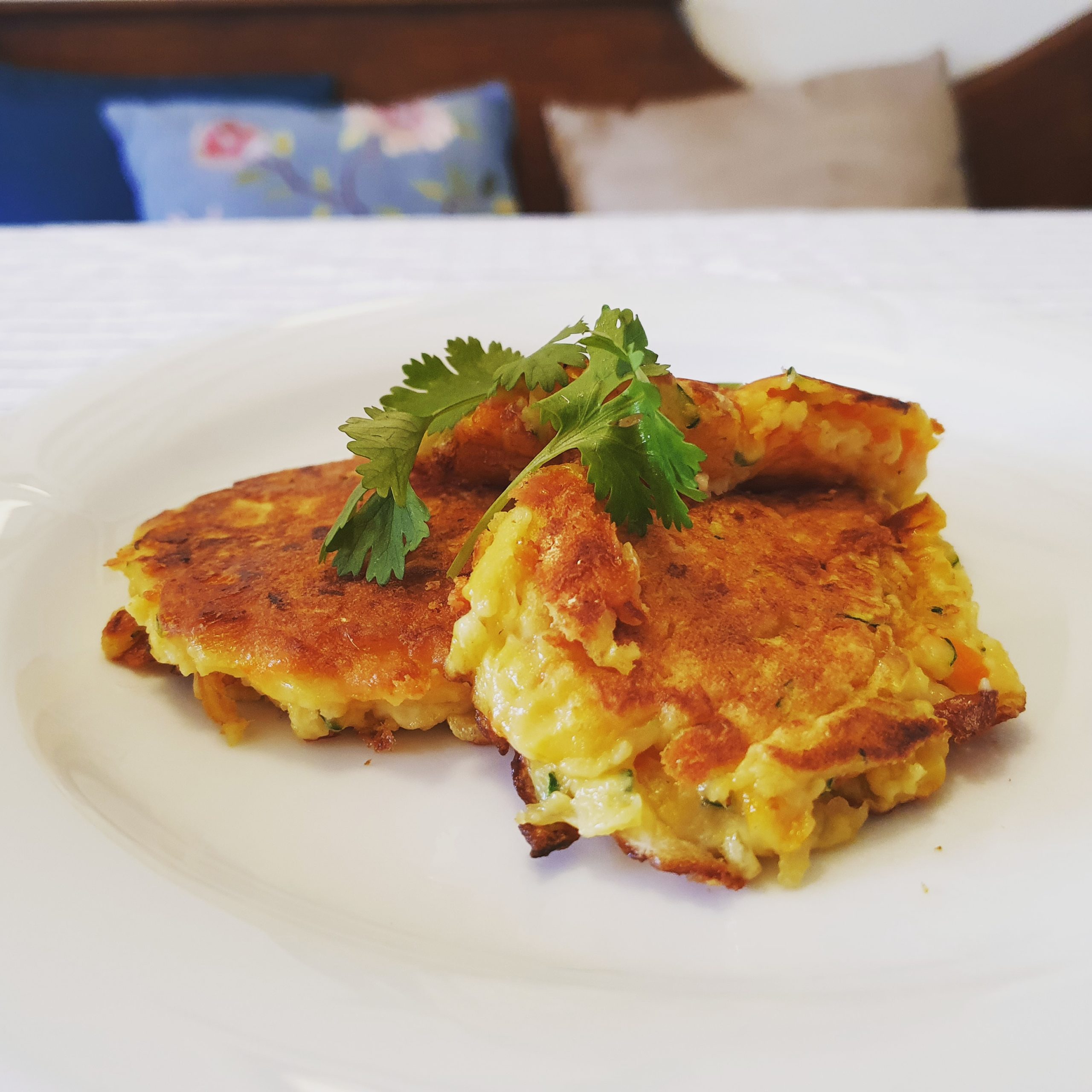
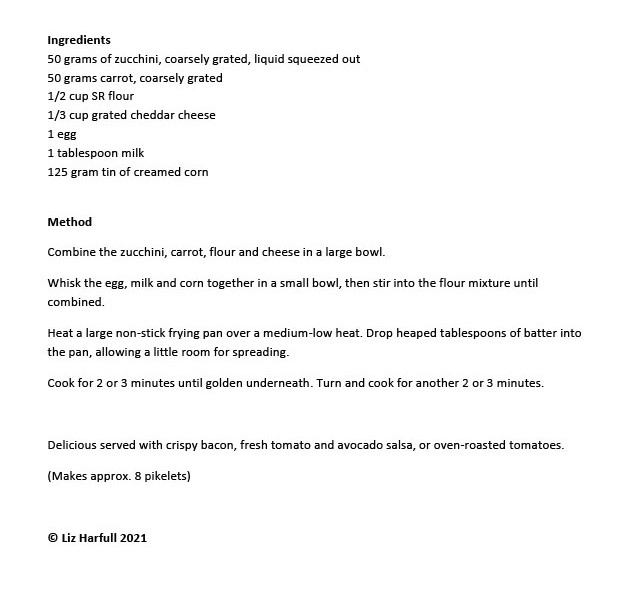
A perfect way to make use of summer’s zucchini bounty. For a delicious light lunch or weekend breakfast, serve with a fresh tomato and avocado salsa, or oven roasted tomatoes and crispy bacon.
Treacle Scones
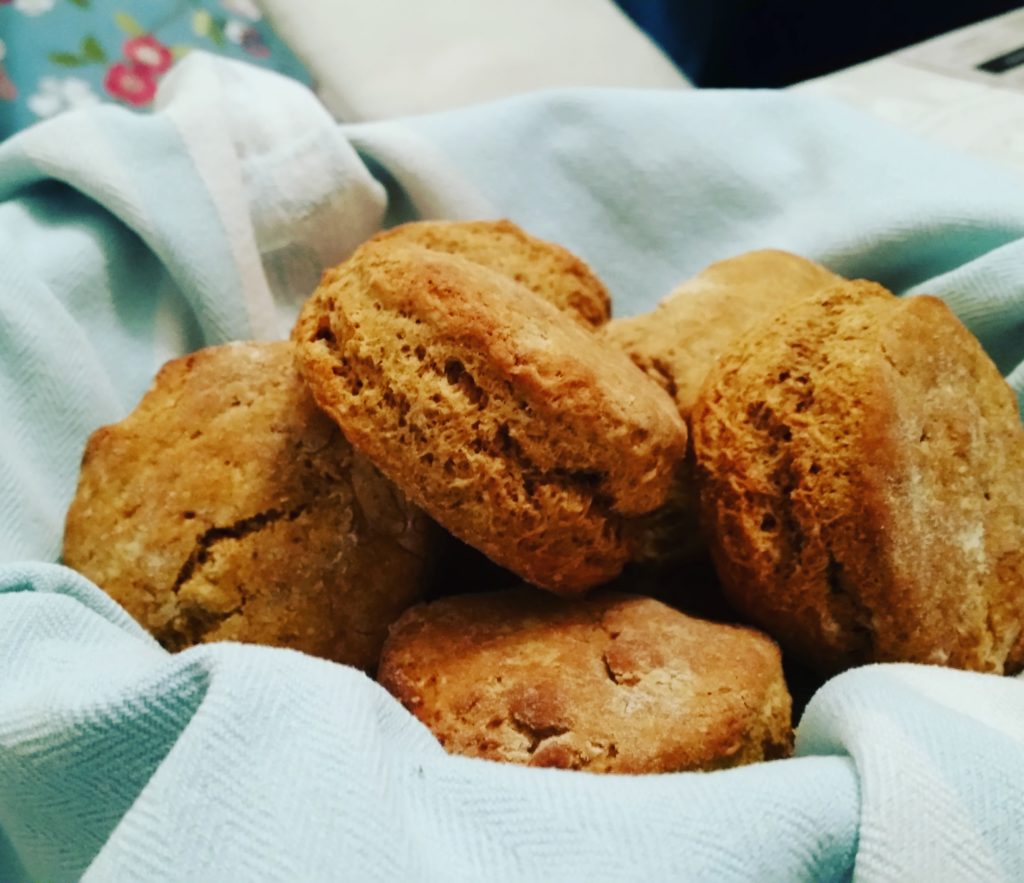
My favourite variation on the classic scone, the original version of this traditional Scottish recipe was published in one of Australia’s most popular cookbooks, The CWA Cookery Book and Household Hints, from Western Australia. This version, carefully revised for modern cooks, featured in my latest cookbook, Tried Tested and True.
Makes about 8
Ingredients
225g (1½ cups) self-raising flour
½ teaspoon ground cinnamon
½ teaspoon bicarbonate of soda
Pinch of salt
60g butter
1 teaspoon caster sugar
1 heaped tablespoon treacle
125 ml (½ cup) buttermilk
Method
Preheat the oven to moderately hot (190C). Line a baking tray with baking paper.
Sift the flour, cinnamon, bicarbonate of soda and the salt together in a large bowl. Rub in the butter until the mixture resembles fine breadcrumbs. Stir in the sugar.
In a small bowl, whisk together the treacle and buttermilk until combined. Make a well in the centre of the dry ingredients and add the buttermilk mixture. Stir together using a knife.
Put the scone dough on a lightly floured board, then knead very lightly until it comes together. Press the dough flat with your hands, until it is about 1cm thick. Use a plain round cutter (approximately 6cm) to cut out the scones, then place them on the baking tray. Bake for about 10 minutes, until golden and they sound hollow when tapped on the bottom.
Liz’s tips
- Sift the dry ingredients together twice to make sure they are thoroughly blended.
- Warm the treacle a little before you mix it with the buttermilk, so it is easier to blend.
- Handle the dough lightly, as you would for any scone.
- These scones are best served warm from the oven, with lashings of butter.
Shirley’s Orange Cake
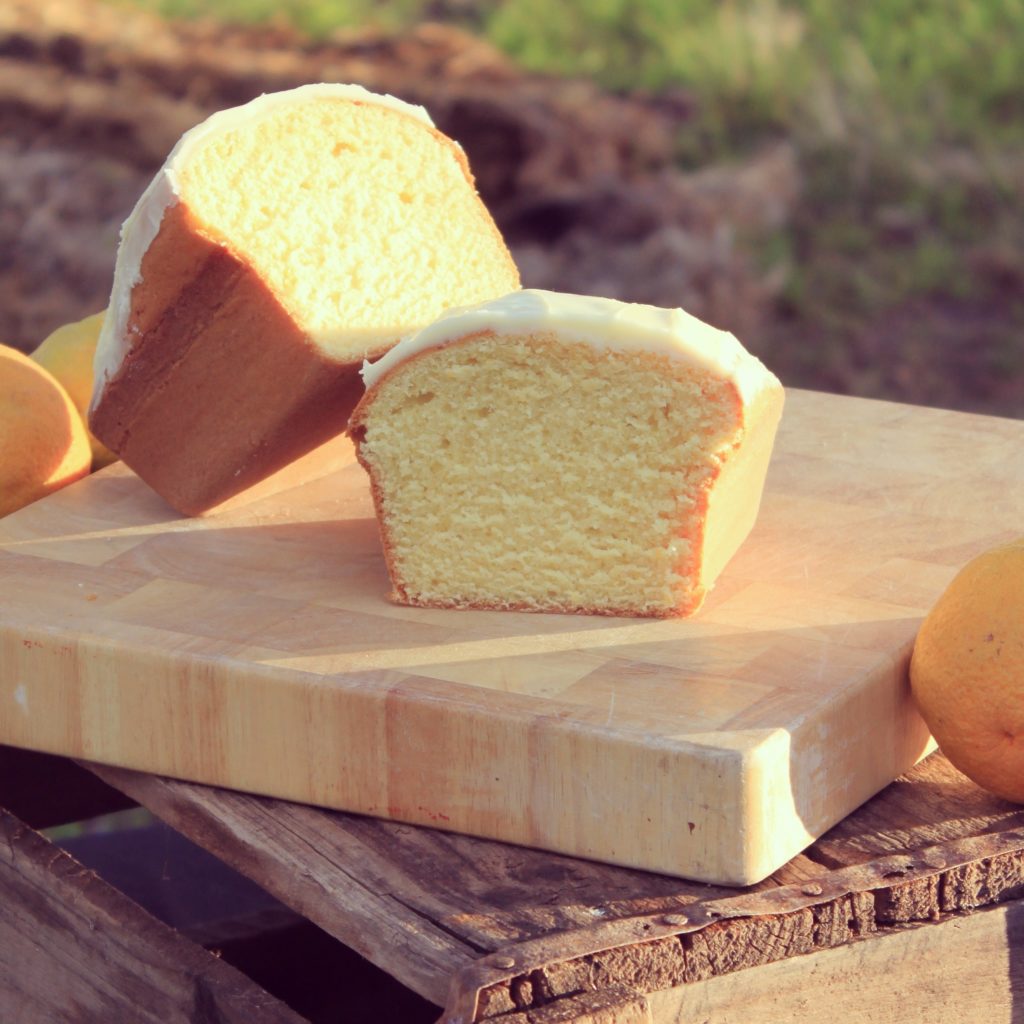
This prize-winning one-bowl orange cake recipe comes from Riverina show cook Tammie Driscoll, who shared memories of her mother, Shirley Schilg, in The Australian Blue Ribbon Cookbook, now out in paperback. It’s quick and easy to make, with a fine, light and fluffy texture, and a perfect way to make use of new season’s oranges.
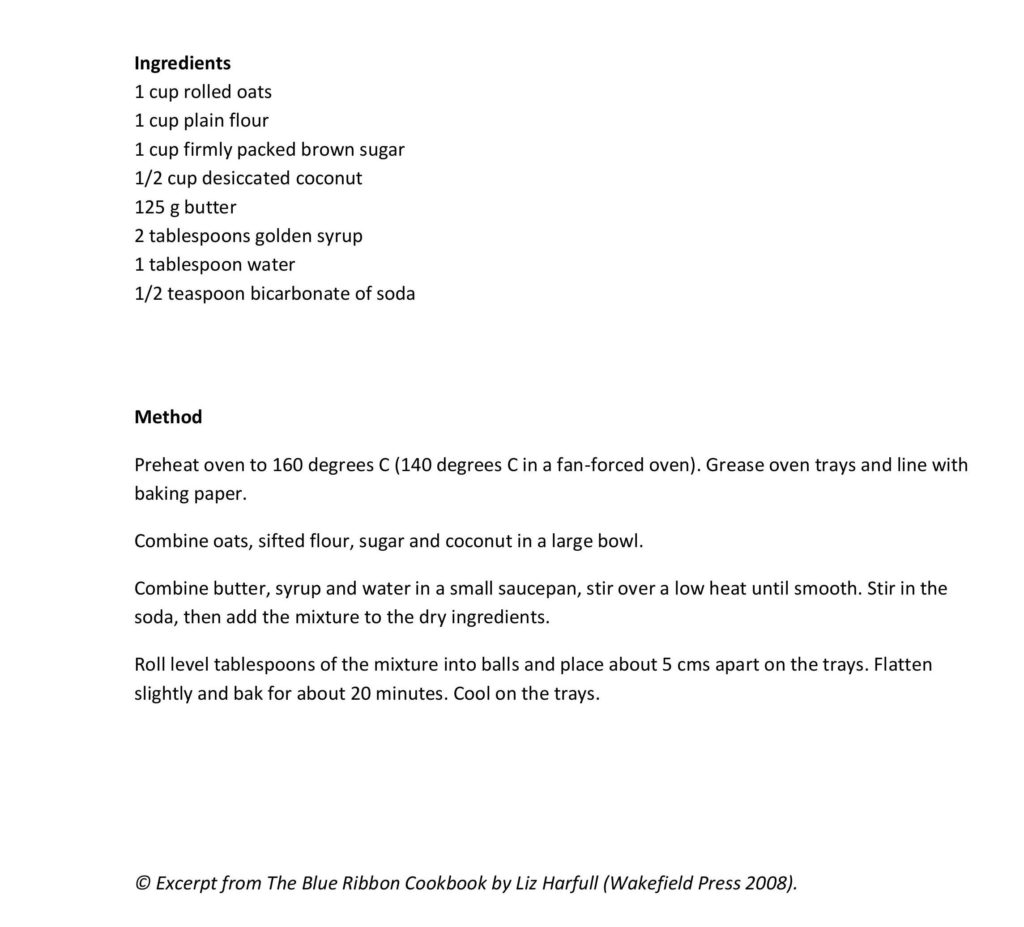
Anzac biscuits
Apple Schmarren
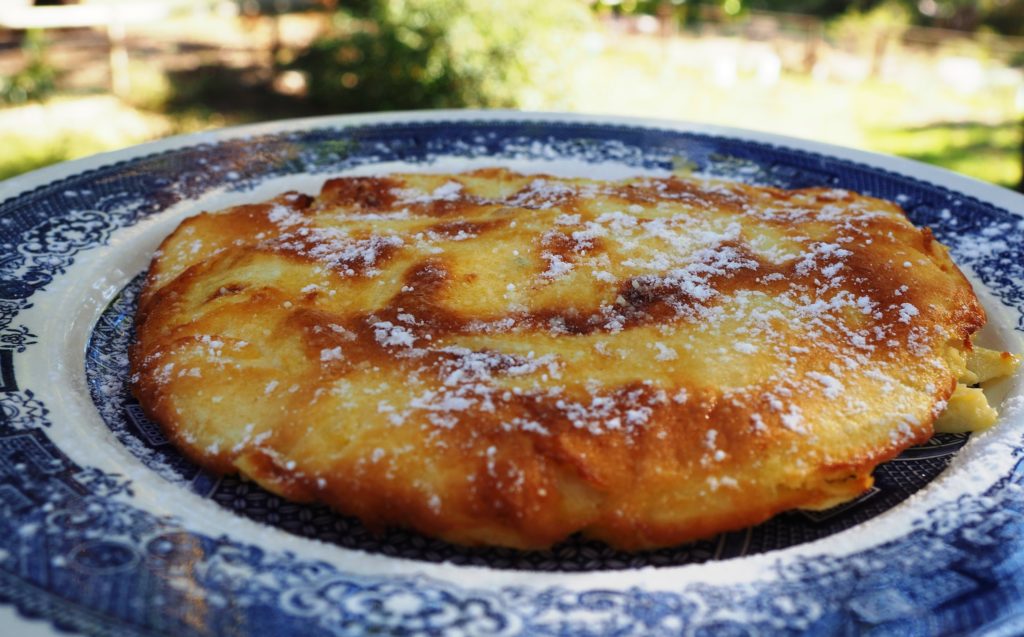
This simple but delicious pancake recipe is a carefully revised version of a recipe that originally appeared in Cookery Calendar from Apple Land, a community cookbook published in Tasmania in 1933 to raise money for the Hobart Free Kindergarten Association. The recipe and the story behind it are featured in Tried Tested and True and Episode 1 of Liz’s new podcast, Country Women’s Wisdom.
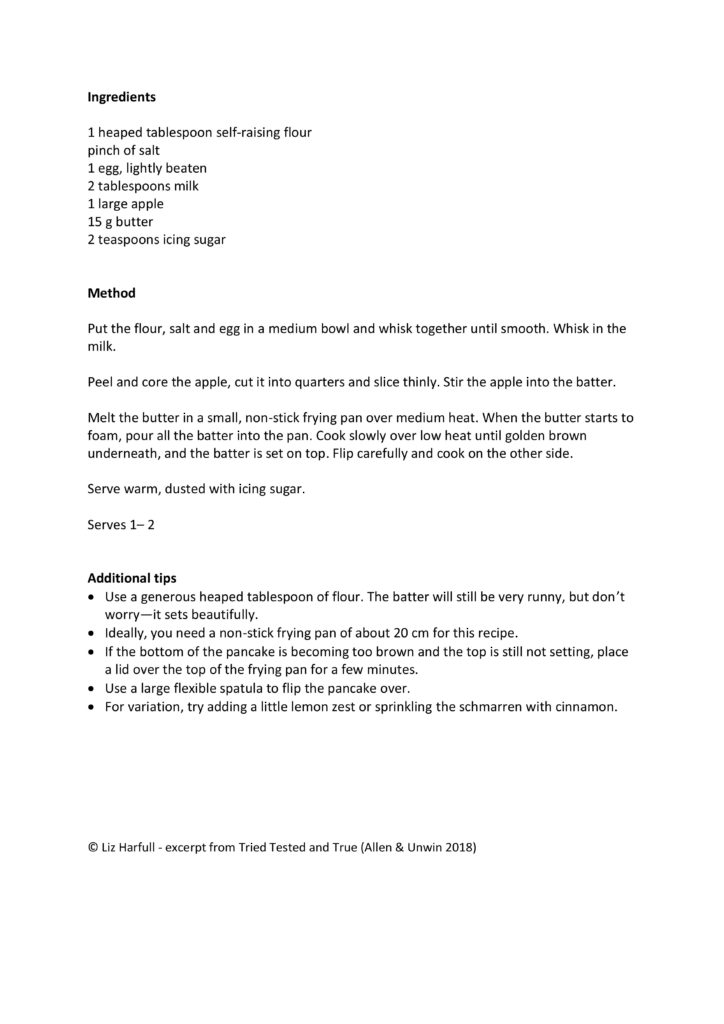
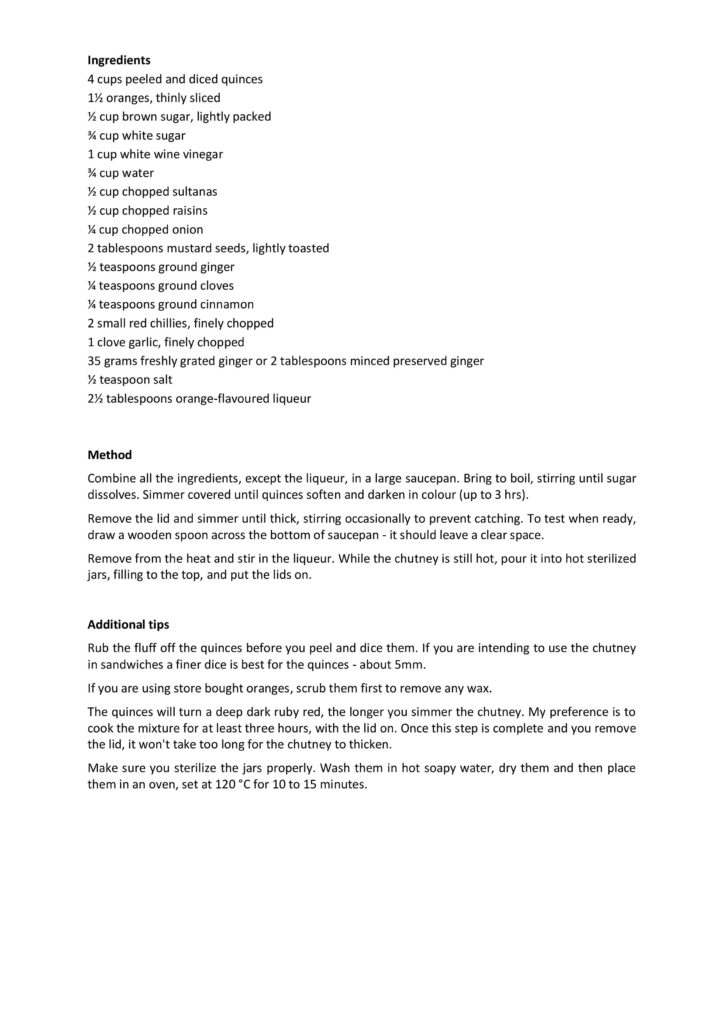
Quince and Ginger Chutney
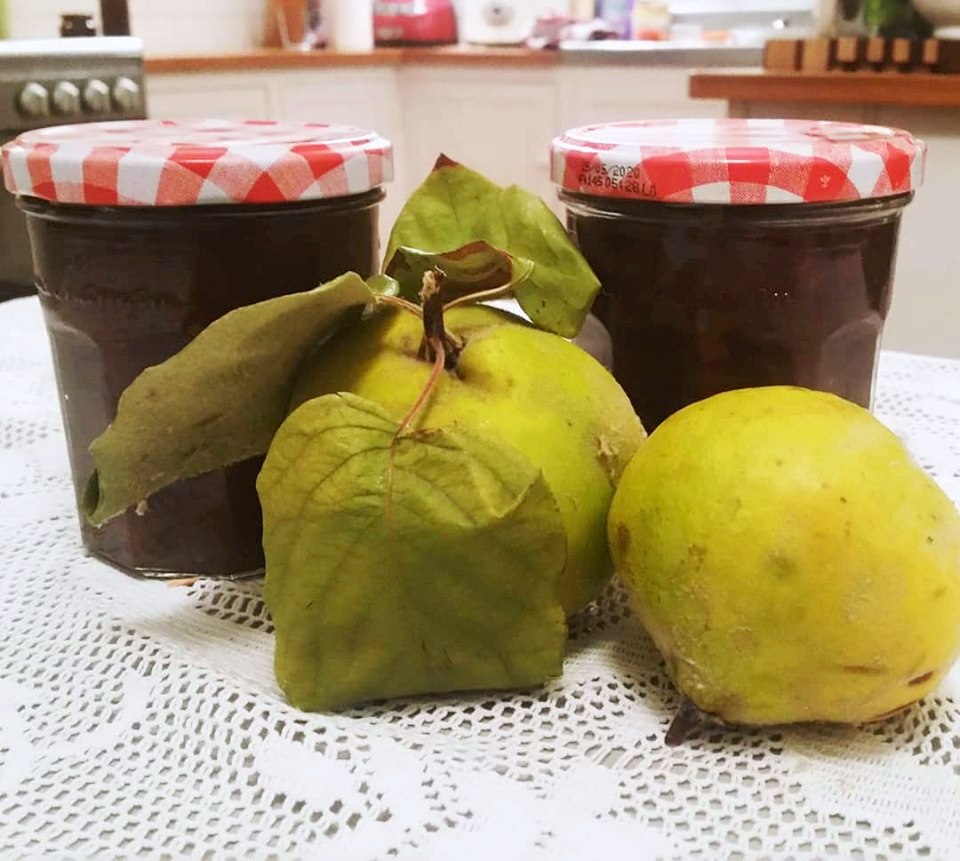
This richly-flavoured chutney, with a gentle hit of chili and a pop of mustard seeds, is delicious served with meat or salads, or try it with goat’s cheese or an aged cheddar. It has been revised by Tried Tested and True author Liz Harfull, based on a recipe originally provided to the ABC by Ann Marston, a show judge and long-term member of the CWA in Victoria’s Maryborough District.
Makes about 4 x 350g jars